


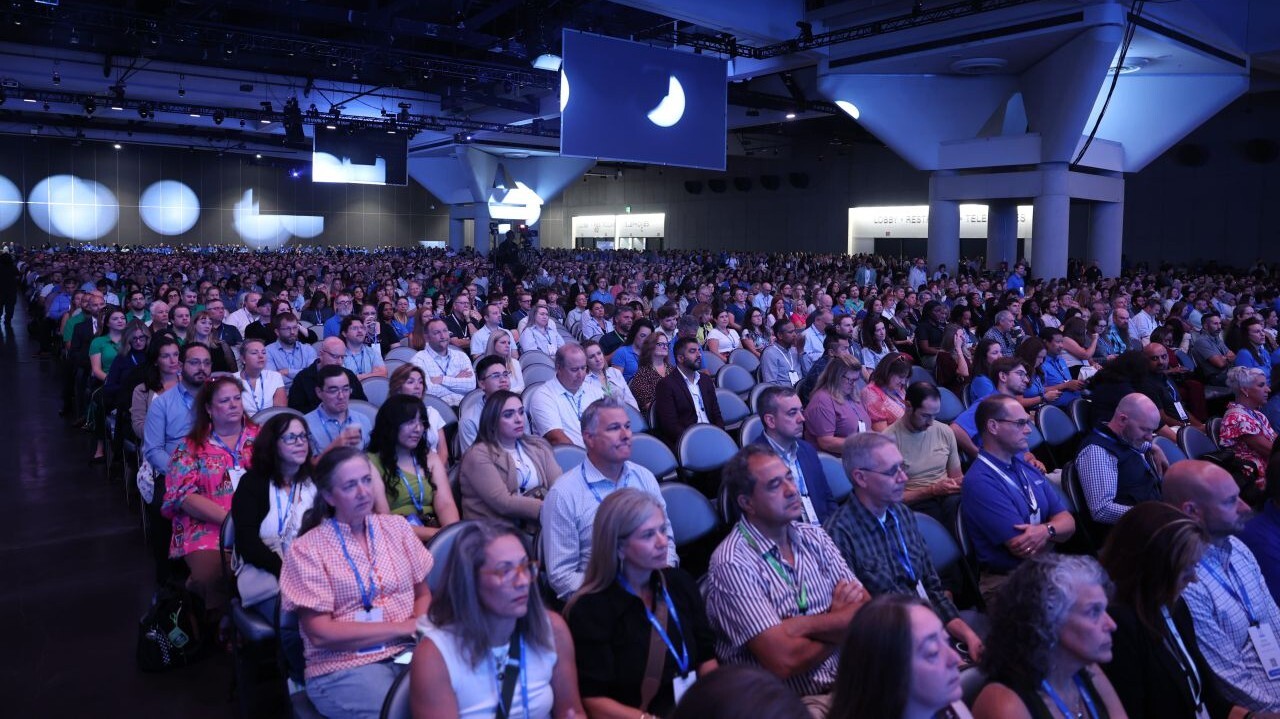
Last week Yardi’s YASC conference took place in San Diego, bringing to a close what has been, by some distance, the most interesting month or so of technology conferences I have ever experienced.
Numerous of the major players in AI have hosted user conferences offering visions and progress updates on what is clearly the most important thing in technology today. Each was highly impressive in its own way. Collectively, they represent a breadth of views on the development, release and adoption of this groundbreaking technology.
Virtuoso and the path to AI .
Amid the more disruptive accounts of AI’s future on offer this fall, YASC had an undertone of stability, long-termism and, most notably, people.
First, some impressive context: Kevin Yardi, who heads professional services, shared some statistics that would be hard for any company to compete with. Yardi’s average client tenure is 14 years, while the average tenure of its associates is an extraordinary 11 years. Both figures attest to the consistency and stability that have characterized the company over 40 years of operation.
Into this peerlessly stable story comes Virtuoso, Yardi’s AI platform. Rob Teel, Yardi’s CEO, described it as “our DNA in AI,” suggesting that “Virtuoso” and “AI” are effectively interchangeable terms. He also positioned Virtuoso as the path to Voyager 8, tying the decision to upgrade Yardi’s core PMS to embracing the platform’s newest technology.
AI already looks ubiquitous in Yardi’s platform, based on a keynote that shared several instructive use cases. In leasing, for example, he announced new AI capabilities for CRM IQ and Chat IQ, including call coaching, support for live tours, automated guest card completion and real-time coaching for leasing agents. It is a logical progression in a market where multiple new entrants have recently been trying to gain ground.
Connectors (first launched a year ago), which allow companies to access Yardi data through LLMs, received extensive coverage. These appear to have seen strong take-up across the real estate sectors Yardi serves and seem increasingly central to Virtuoso’s value proposition.
Teel also briefly addressed the suggestion that chat will replace dashboards. This idea, which I have heard from numerous senior executives who ought to know better, has featured in several presentations I am giving this fall (and an interesting LinkedIn conversation this weekend).
To his credit, Teel said he was mostly skeptical of this view, suggesting AI is an as well as, not an instead of, as far as dashboards are concerned. I could not agree more.
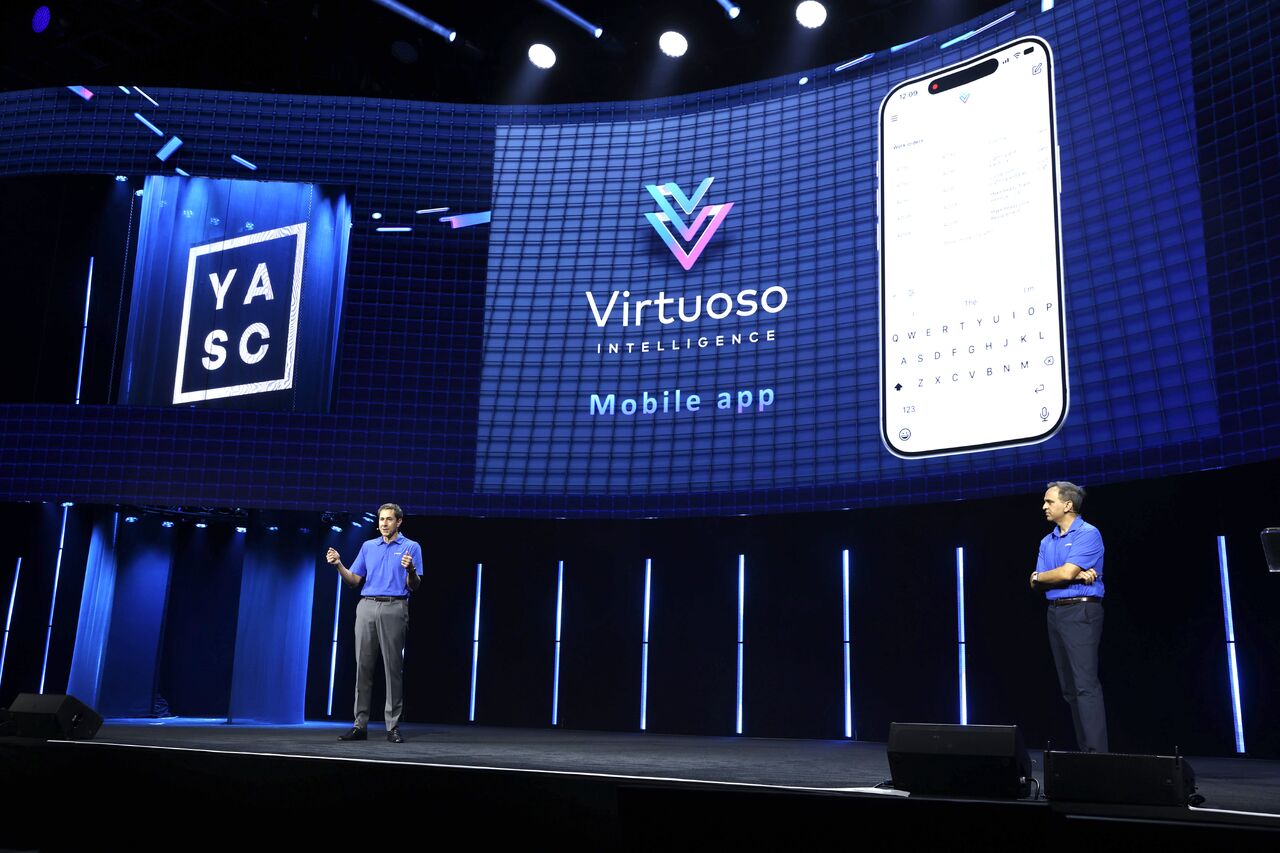
Rob Teel (CEO) and Akshai Rao (President, Multifamily) at the YASC
AI design and the human in the loop
Yardi President of Multifamily, Akshai Rao, gave an impressive presentation that got deeper into the more agentic aspects of Virtuoso. Specifically, he shared five principles guiding the design of Yardi’s AI agents:
- Value-first: Focus on delivering value.
- Easy to start: Make AI simple to adopt.
- Complex behind the scenes: Handle complex workflows while keeping the experience simple.
- Auditable: AI must be able to show its workings.
- Human in the loop: People must remain involved in decisions.
The last point raises one of the most fascinating questions about how we think about AI. On one hand, humans must remain accountable for the actions of AI. On the other, requiring human involvement places an interesting constraint on software design.
It is a nuanced but increasingly important distinction. Previous keynotes from EliseAI and AppFolio presented a vision in which AI does more of the work, including some levels of decision-making.
The distinction is sometimes described as “human on the loop” rather than “human in the loop.” Humans retain overall control but have varying degrees of involvement in the processes AI executes.
The design implication is that “on the loop” gets closer to the first-principles question: “How should AI solve this problem?” Requiring human review at specific steps narrows the range of potential solutions.
I do not see either approach as marginalizing people from multifamily. Rather, software designed around the principle of autonomous decision-making broadens the ways we can imagine operations working. And that, in turn, may be the best way to understand where people will have the greatest leverage.
I will return to this subject in more detail, but for much deeper analysis of the concept of “AI-First” in multifamily tech, follow our current series of deep-dive interviews on the subject.
A surprise announcement
Finally, the one thing that was definitely not on my YASC bingo card: Yardi has launched an ILS.
In a fascinating presentation, Indystry Principals Samantha Skrobot and Ben Rubin explained how the company has recruited a community of TikTok influencers to bring leads at various stages of intent into the RentCafe platform, where they plan to develop those leads into leases. The plan is to charge for the service on a per-lease basis.
It was one of the more interesting ideas at the event, and somewhat reminiscent of the early days of social media, where the major online travel agents recruited leading travel writers in a bid to gain control of the top of the demand funnel.
But this conference, like the rest of this year’s conference season, has been all about AI. A succession of events has told us a great deal about not just who is leading our industry, but what leading really means at a time of such rapid change.
For now, though, my sincere thanks to Yardi for organizing such an excellent event and including external observers like me for the first time. It offered a peek behind the curtain at the remarkable following of the most durable tech company in our industry. And it has changed how I think about the ongoing competition between AI platforms that is transforming multifamily.