


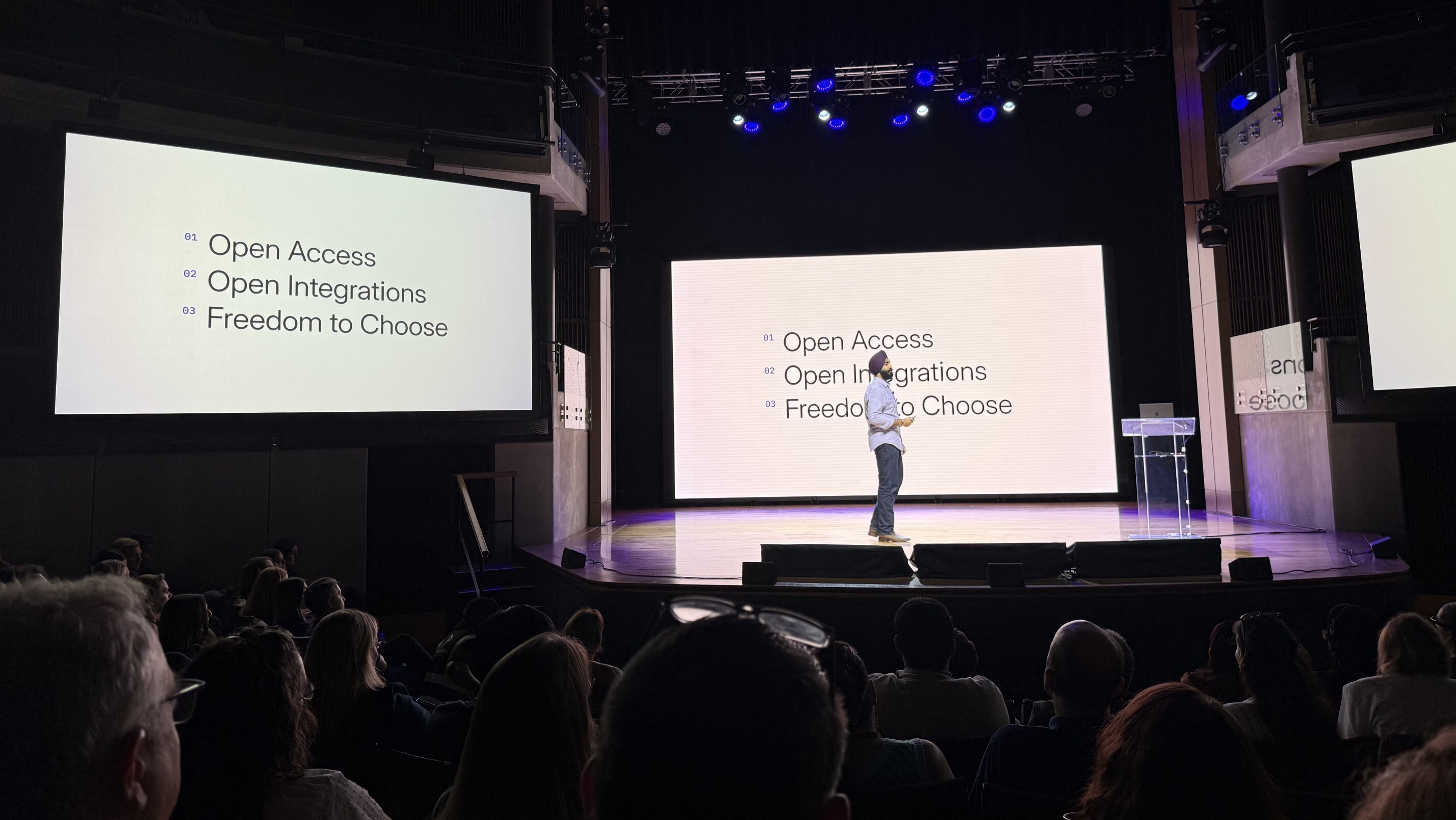
Sometimes, what we can see makes us more aware of what we cannot. Before Neptune was observed in 1846, irregularities in Uranus’s orbit led astronomers to predict another planet, close to where Neptune was eventually found. Something similar was happening in Nashville last week. Elise Beyond, the inaugural user conference of EliseAI, charted AI’s already rapid rise while offering clues about how it may disturb some long-established orbits in multifamily technology.
It started with a much-anticipated keynote. Having attended many such presentations, I have found them a useful window into a company’s culture. Led by CEO Minna Song, this one presented a founder-led talent factory of a company. The celebrity speakers and investor-friendly product announcements of more established events gave way to show-and-tell, focused on software that already exists, with the company’s engineering talent doing most of the talking.
One Giant Leap for One Agent
The event’s main reveal was Apollo, a unifying concept and feature that enables users to access the platform’s full range of business functionality through a single agent. EliseAI describes the concept as “prompt-based property management.” Its unveiling gently poked fun at competitors. A spoof announcement promised “1,000 new agents, one for every property management function,” before revealing that there was, in fact, only one.
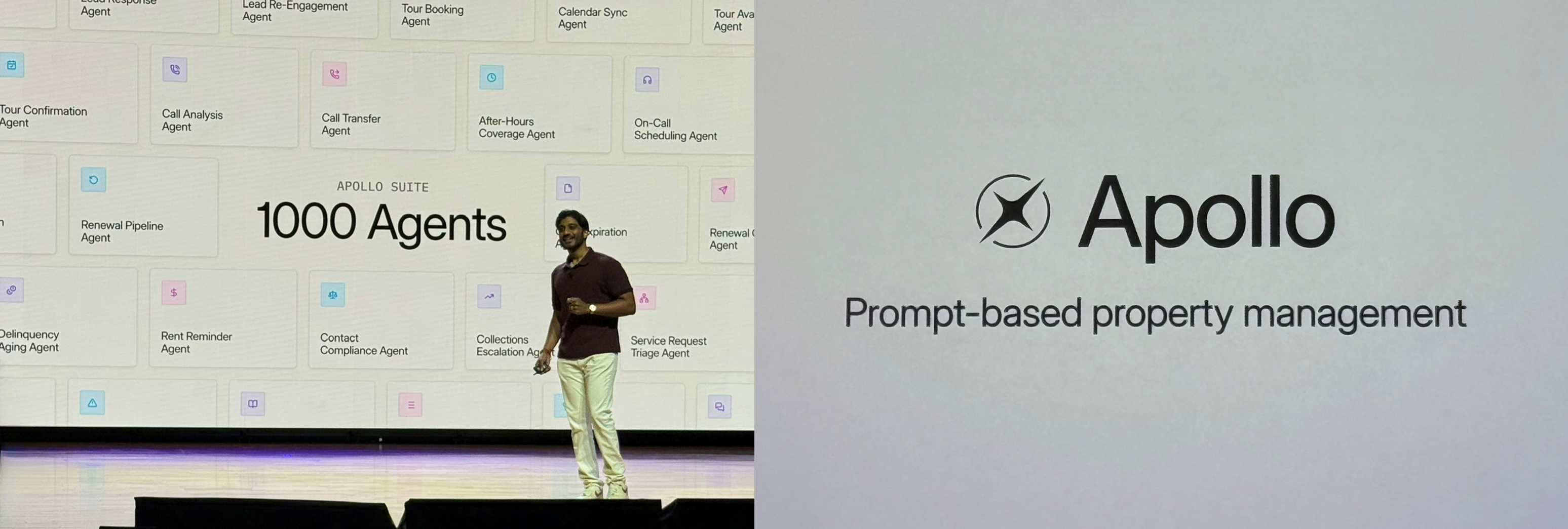
And that’s the point. The vision is that the context gathered from all those conversations is too valuable to remain in silos. In the keynote, Song explained how our industry’s intuitions on technology are mostly the legacy of how PMSs developed: as systems of record for different types of documents. And that is the wrong way to think about AI.
It is AI’s ability to connect the dots and work across areas that we conventionally think of as silos that holds the greatest potential. Information gathered during a maintenance conversation may be relevant to a renewal conversation, for example. The heritage of siloed data repositories should be seen as a constraint, and EliseAI presented its AI-first approach as a contrast to the legacy model. In this vision, the PMS remains the system of record, while AI performs practically all resident-facing and associated operational functions.
That delineation breaks another persistent industry paradigm: software tends to serve the real estate rather than the customer experience. That was the subject of an enjoyable panel I took part in earlier in the week at Apartment List’s annual meeting. Sales, marketing and service delivery have traditionally been designed to address performance needs before customer wants. Elise’s design philosophy seems to turn that on its head.
What the Data Tells Us
The keynote’s engineering-forward program included a data science segment that made two bold commitments. First, Elise aims to organize and serve data better than any other company in the industry, supported by a single data model across every product surface. They also reiterated the firm’s commitment never to close an API, contrasting conspicuously with other suppliers in the industry.
The same presentation also used data to show how AI is changing behavior. That included how voice AI calls have been lengthening over time, and empirical evidence of how damaging any handoff (between systems or team members) can be to the sales process. This was high-quality analysis, and it made a compelling case for the single-agent model, particularly in leasing.
The single-agent argument developed further on day two with a presentation about tech-stack consolidation, a subject familiar to readers of this blog. Beyond potentially removing an integration, replacing one product logo with another does little to change how a company operates. The bigger opportunity is to reimagine property management for an environment in which AI can perform substantial parts of the work.
The talk was really about another hobby-horse of mine: the AI-First mindset, and its power to change both operations and technology radically. Multifamily has spent years installing widgets to solve individual problems. AI-First adoption begins with a more fundamental question: which processes and dedicated functions do companies still need when AI can handle many of the underlying tasks?
That message was obviously self-serving in this case, but no less compelling for it. If AI can orchestrate tasks across conventional technological and organizational silos, it changes both our relationship with technology and how companies themselves can be organized.
When Familiar Orbits Shift
Like several other sessions at the event, the tech consolidation talk described new solutions to problems rooted in PMS databases built before AI. Many of the problems EliseAI solves are artifacts of technology never intended to support an AI-native operating model.
As with Neptune all those years ago, what we can already observe is beginning to reveal what comes next. At Elise Beyond our hosts offered their vision for how property management should work. That vision remains a work in progress, and the technology continues to change quickly. For now, congratulations to EliseAI on a highly successful introduction of an event that will surely grow in stature as this remarkable company continues to define this space.