


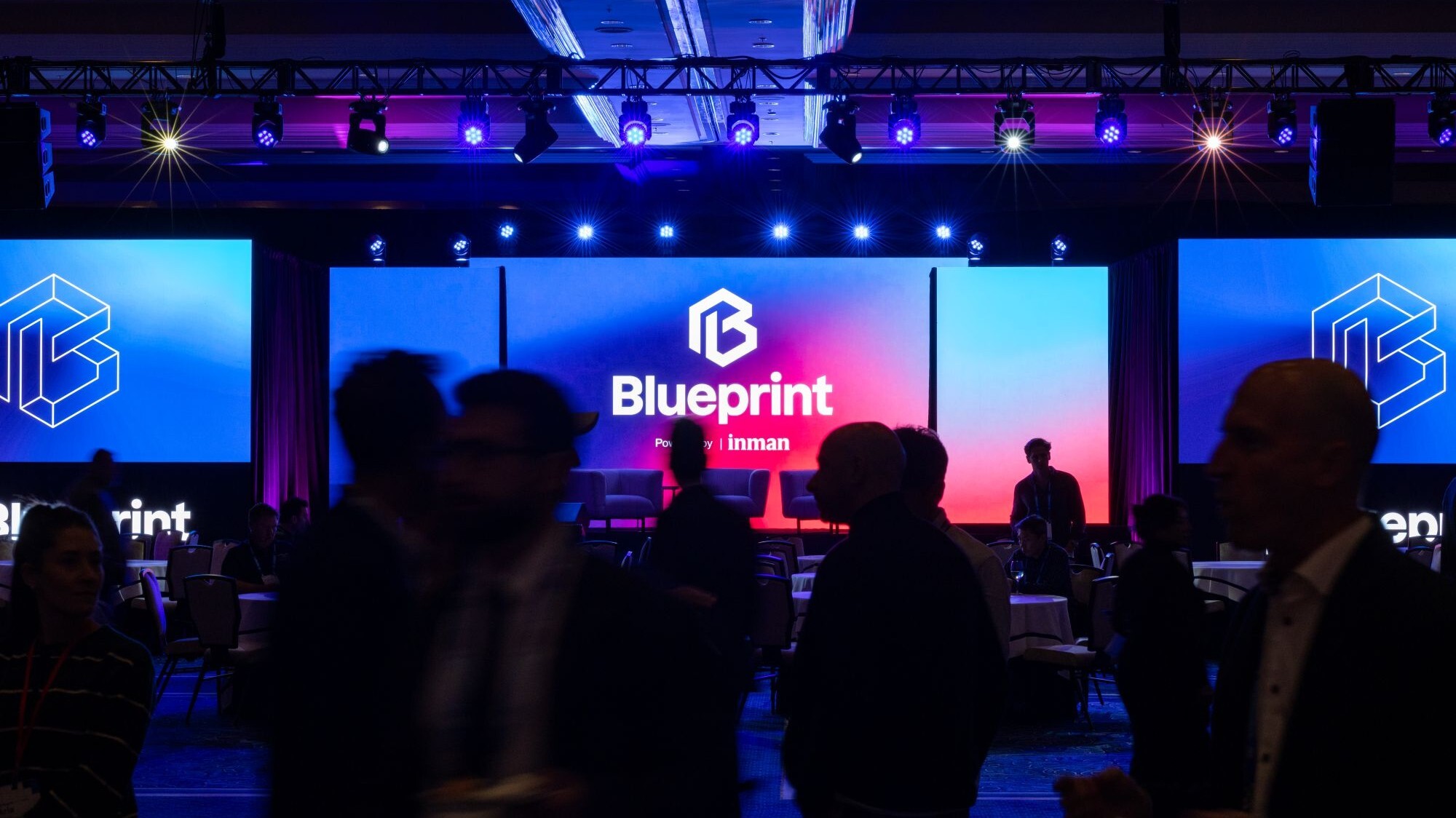
Blueprint just wrapped in Las Vegas and, as usual, it was an excellent melting pot of people involved in real estate technology. I use “melting pot” advisedly, because it feels descriptive of the niche Blueprint has built for itself over the last few years.
Blueprint is the best representation of the proptech ecosystem, with early-stage and mature startups, VCs, private equity players (who are increasingly important at this point in the cycle), and property companies involved in both using and investing in software. The result is a more grown-up conversation than at many industry events, and one that has earned Blueprint a durable place on the multifamily circuit.
Content is part of the appeal. Blueprint’s appetite to collaborate with partners who can bring good content to the stage keeps things relevant. But what particularly defined this year’s conference was the nature of the conversations happening around the event. They told us a lot about where we are in the technology cycle.
Where have all the startups gone?
As the “VC years” of multifamily technology slip further into the past, it is hard not to notice that the population of emerging technology companies is withering. A look at the sponsor list suggests fewer multifamily suppliers in the ~$10m-ish ARR range than we would have seen a few years ago. The relative absence of large platforms might also suggest fewer companies shopping for acquisitions.
A couple of interesting points came up repeatedly: If fewer companies are growing to the point that was normal for acquisition targets a few years ago, how do larger companies achieve growth? Subsuming $10m in ARR and driving faster growth through greater go-to-market capacity has been a relatively normal play for companies further up the food chain. But with fewer acquisition targets at that stage, it seems they must find other ways to grow.
Another interesting point was that it is becoming harder for PMCs to identify relatively early-stage companies that are likely to be significant players a couple of years from now. Viability of solutions and their providers seems to be a bigger focus for those walking the trade show floor. It’s getting harder to predict as things are changing quickly.
The developing story of AI
Of course, AI is central to the shifting currents of multifamily tech. Our current series of Multifamily Tech Talk is exploring the idea of “AI-first” with companies that have particularly interesting perspectives on how technology, and the technology market, is changing as AI gets deeper into the stack.
One recurring theme is that the boundaries between technology categories are eroding. AI-first platforms are broadening what they do as AI works increasingly seamlessly across boundaries that previously defined separate categories of software. The recent interview with AppFolio and the forthcoming one with EliseAI provide a technology-centric explanation of why that is.
That should make us think differently about what a viable technology company looks like in the AI era. AI-first was also the theme of my (thoroughly enjoyable) Blueprint panel, which showcased three companies transforming parts of their operations with innovative AI technology.
Aaron Ross of Birge & Held described the progress the company has made with Marc in AI-first contract management. Jeremy Voigtmann, Managing Director of Development at Harbor Group, described a particularly interesting evolution with TailorBird in the domain of capital management, an area that offers far more efficiency upside than most operators realize.
Finally, Doug Pearce, CTO of Waterton, explained how EliseAI’s technology has accelerated the company’s reinvention of property administration. The point of the three examples was that they demonstrated capabilities that delivered meaningful improvement that would not have been attainable before the AI became available.
A common theme in this panel and in the current pod series is that AI-first technology is not simply giving us better ways to process existing data. Increasingly, it seems to be creating new forms of data from which companies can identify new sources of value. Getting humans out of the business of inputting or creating data seems to be a common characteristic of some of the most promising AI-first technologies.
Time will tell
All of this makes the future of legacy software models increasingly difficult to predict. But the way technology companies develop, the ecosystem for acquiring them and the long-term prospects of platforms are all sufficiently uncertain to provide excellent fodder for conversations at events like Blueprint.
And that is something Blueprint does particularly well: helping the industry make sense of a technology environment that is becoming more unpredictable as the technology itself becomes more capable.
Once again, I congratulate the Blueprint team on another excellent show. And I look forward to embracing further uncertainty next year!